
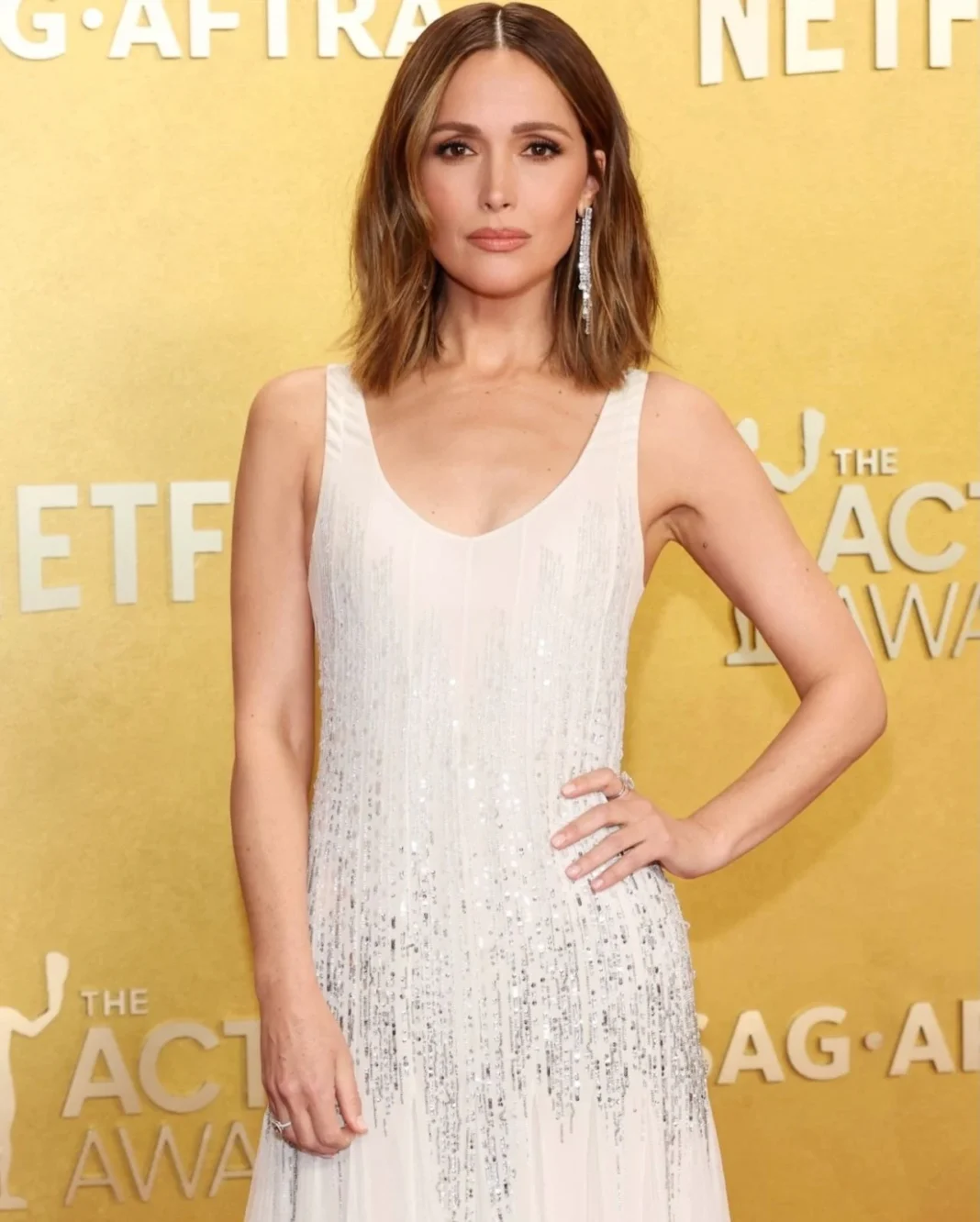
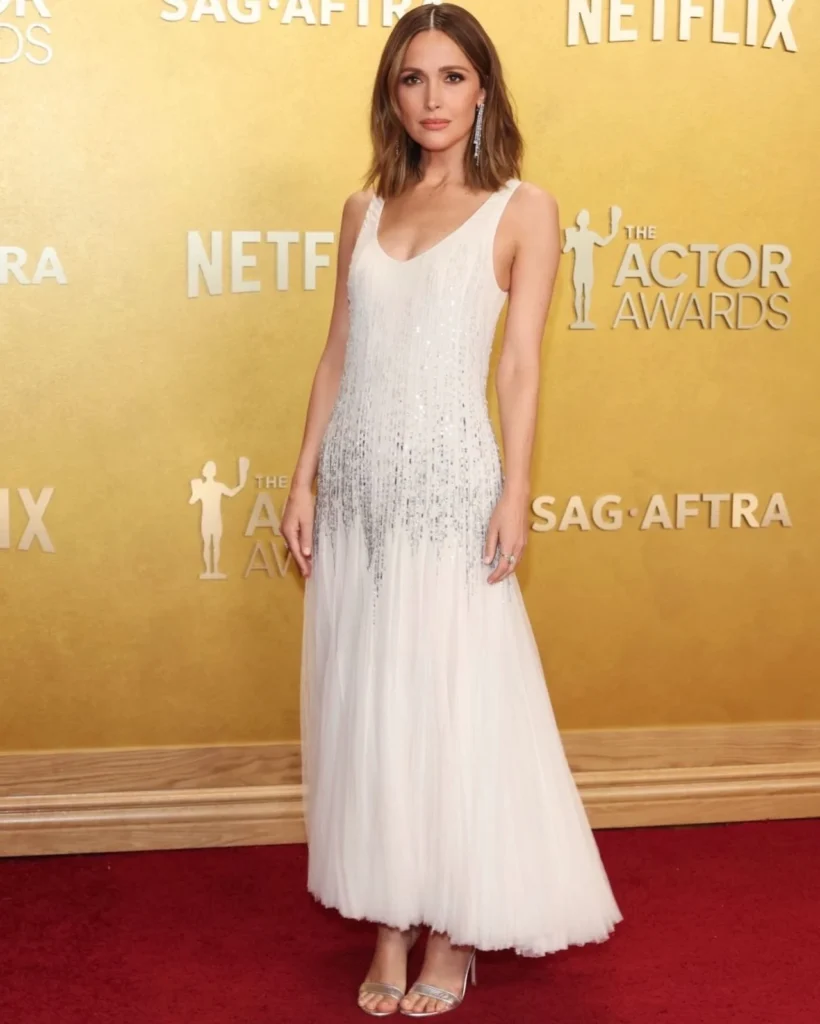
At the 2026 Screen Actors Guild (SAG) Awards, acclaimed actress Rose Byrne delivered a standout fashion moment in a breathtaking gown from Chanel’s Métiers d’Art collection. The look struck a beautiful balance between classic elegance and modern refinement, offering one of the night’s most memorable red‑carpet outfits.
Rather than opting for a traditional award‑show dress, Byrne chose a couture masterpiece that felt timeless yet fresh — a gown that showcased expert craftsmanship, thoughtful detail, and a strong sense of personal style.
A Gown Fueled by Craftsmanship and Elegance
Chanel’s Métiers d’Art collections celebrate the artistry of fashion — highlighting the work of Chanel’s expert ateliers in embroidery, tailoring, and embellishment. Byrne’s gown was a perfect example of this tradition, illustrating how couture can feel deeply artistic and emotionally impactful without overwhelming.
The dress featured a rich combination of textures and finishes, with delicate fabric layering that gave depth and movement to the silhouette. Its refined structure framed Byrne’s figure elegantly, while fine artisanal details lent the ensemble a sense of understated luxury.
This wasn’t a gown that shouted with embellishment or flashy accents. Instead, it leaned into quiet sophistication — a style that draws attention through quality and composition rather than sheer visual noise.
The Silhouette: Classic with a Modern Twist
At first glance, Byrne’s gown read as timeless — a silhouette that could have walked any red carpet in the last few decades. But a closer look revealed contemporary refinements that pushed the design into modern territory.
The bodice was tailored with precision, offering a flattering structure that hugged the torso and emphasized clean lines. The neckline was elegant and modest, blending seamlessly with the rest of the gown’s sculptural shape.
From the waist downward, the dress flowed with a gentle sweep that balanced formality and movement. It wasn’t overly voluminous or constrained; instead, it struck a poised and graceful stance that felt both regal and wearable.
This blend of classic couture shape with contemporary rhythm made the look feel relevant — a testament to how traditional fashion houses can reinterpret archival influences for today’s red carpet.
Subtle Details With Profound Impact
While the overall silhouette was elegant and refined, the gown’s success lay in its fine details — subtle touches that elevated the ensemble without overpowering it.
Textured fabric panels created gentle visual contrast across the dress, offering dimension and tactile interest. The surface wasn’t flat; instead, it played with light and shadow as Byrne moved, giving the gown a lively presence that felt dynamic without feeling busy.
Artisanal touches — perhaps embroidery, pleating, or other couture techniques — brought depth to the look, harkening back to Chanel’s rich tradition of craftsmanship. Yet these elements were integrated organically into the design, reinforcing its sophistication rather than drawing attention away from the overall harmony.
This kind of thoughtful detail is a hallmark of couture: craftsmanship that enhances the story of the outfit rather than distracting from it.
Styling That Let the Gown Shine
If the gown was the centerpiece, Byrne’s styling ensured it remained the clear focal point. Rather than layering on busy accessories, she chose minimalistic accents that supported the dress’s elegance without competing with it.
Her hair was styled in a sleek yet soft updo that framed her face with natural ease. Makeup followed a similarly refined path — polished but understated, with tones that complemented the gown’s hues without overwhelming the overall look.
Jewelry was strategically subtle. Rather than opting for large, statement pieces, Byrne selected accents that enhanced her ensemble with quiet gleam, echoing the dress’s refined spirit without pulling focus from its artistry.
This synergy between garment and styling reaffirmed a powerful red‑carpet principle: sometimes restraint allows craftsmanship to speak loudest.
Why the Look Resonated
Several key elements helped make Rose Byrne’s appearance one of the night’s most talked‑about fashion moments:
1. Celebrated Craftsmanship
The dress wasn’t just stylish — it was artisanal. Its fine details reflected hours of atelier work, making fashion feel like art rather than mere decoration.
2. Balanced Silhouette
The blend of classic structure and modern fluidity helped the gown feel timeless yet current.
3. Cohesive Styling
Hair, makeup, and jewelry were all chosen to support the gown rather than compete with it — a testament to thoughtful presentation.
4. Elegant Presence
Byrne carried the look with poise and confidence, reinforcing how fashion and personality can complement each other on the red carpet.
Together, these elements underscored how a red‑carpet outfit can be both visually striking and deeply refined without relying on overt extravagance.
The Legacy of Chanel Métiers d’Art
Chanel’s Métiers d’Art collections honor the maison’s artisan partners — the ateliers specializing in embroidery, feather work, pleating, and more. These collaborations push couture beyond surface beauty, focusing on texture, craft, and the artistry behind every stitch.
Byrne’s gown was an embodiment of this legacy. It wasn’t simply a beautiful dress to wear — it was a showcase of slow fashion principles and atelier mastery.
In an era of digital fashion moments and fast aesthetic turnover, such craftsmanship stands out because it feels real — grounded in technique, texture, and intentional expression.
A Night to Remember
At the 2026 SAG Awards, Rose Byrne’s choice of a Chanel Métiers d’Art gown wasn’t just a red‑carpet outfit — it was a fashion narrative. It spoke of artistry, precision, and emotional resonance, showing how couture can still captivate when grounded in refinement and thoughtful design.
Her appearance offered a lesson in how a powerful fashion moment doesn’t need to shout — sometimes it needs to whisper with intention.
It was a night where craftsmanship took center stage, where elegance was expressed through proportion and detail, and where fashion felt as much about heritage as it did about the present.
In a world full of loud, flashy outfits, this was a moment defined by poise, precision, and quiet brilliance.